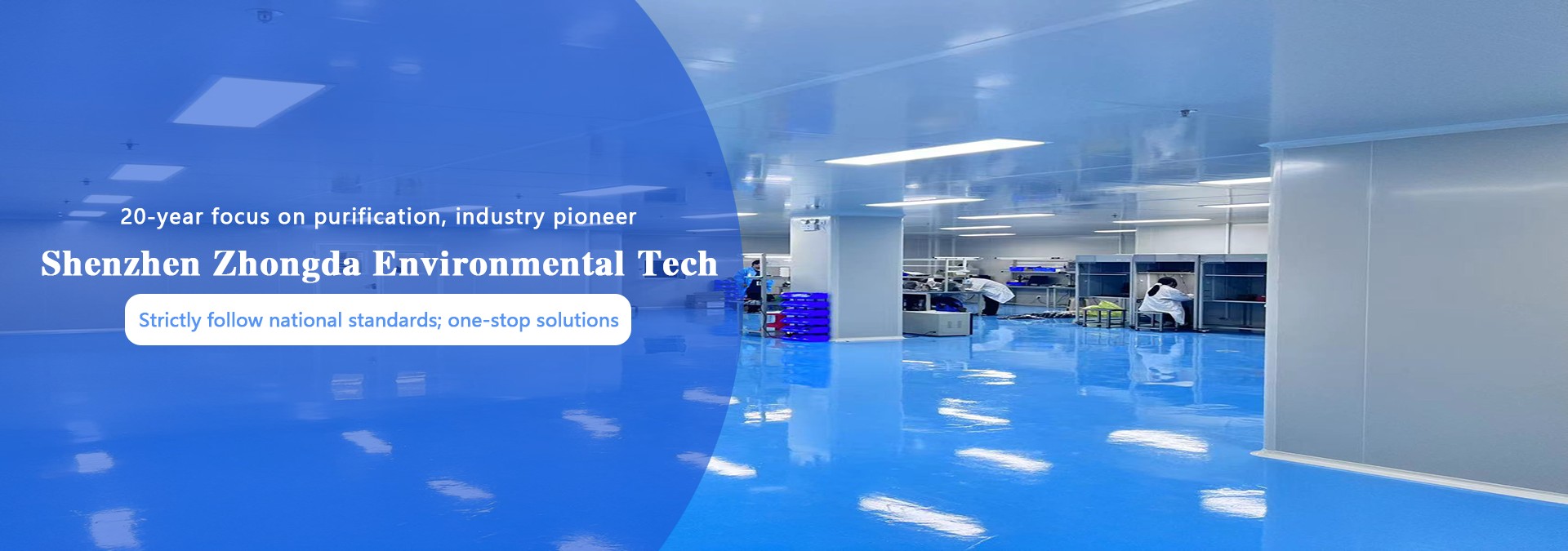
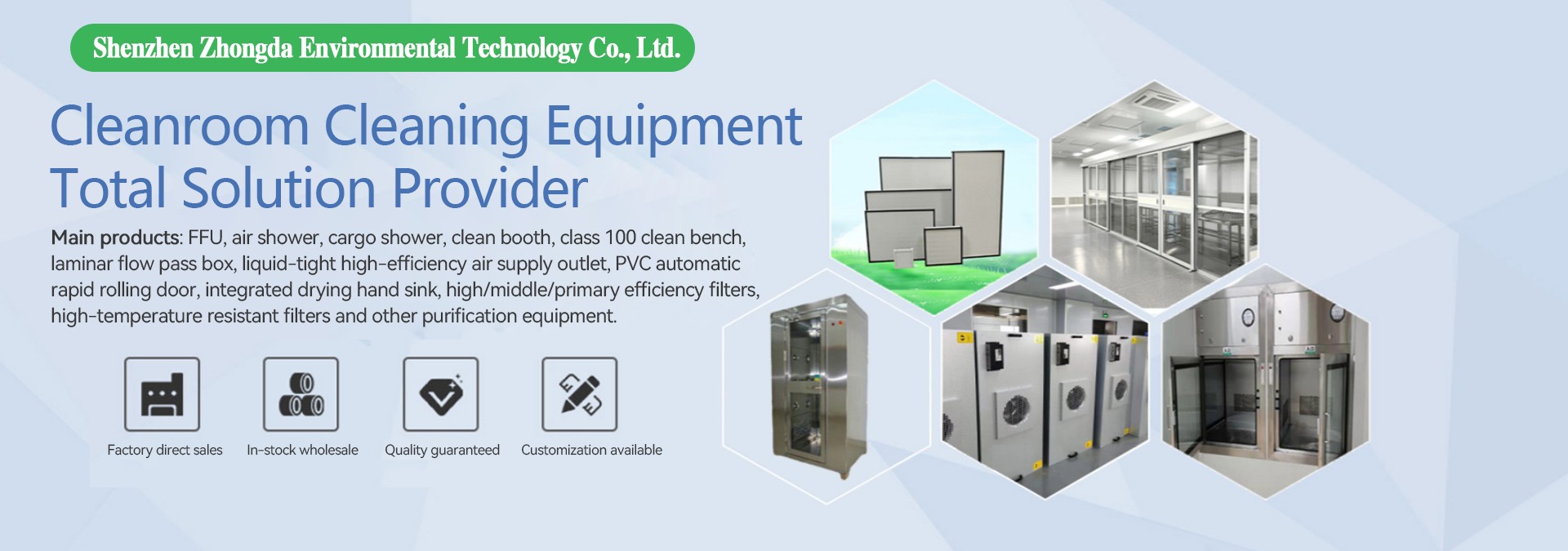
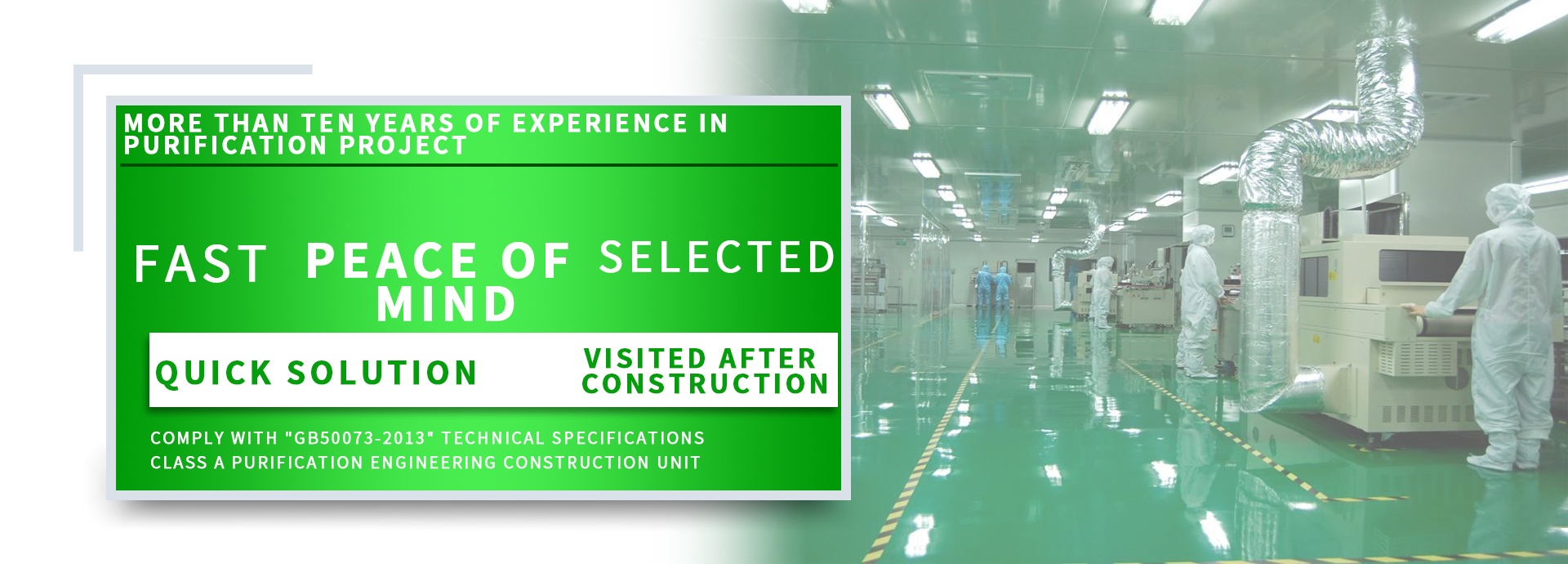
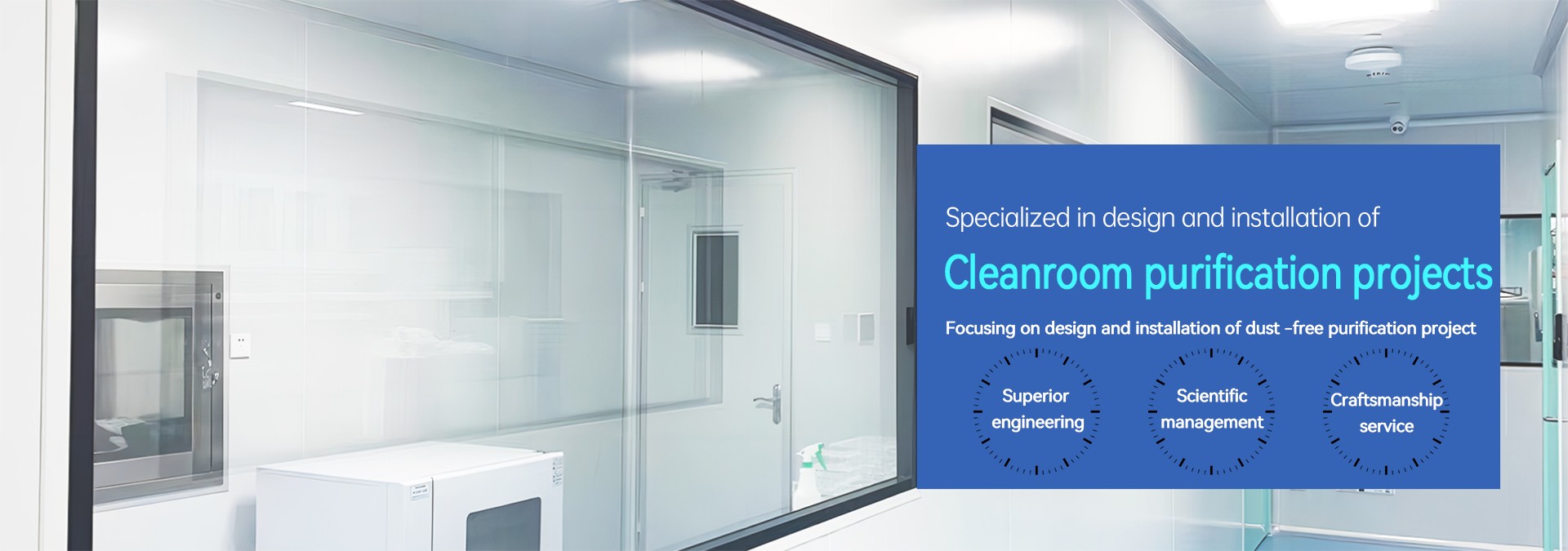
In high-precision industries such as biomedicine, food, and electronic manufacturing, the cleanliness of the production environment directly affects product quality and compliance. Whether it is the GMP certification requirements in drug production or the strict control of dust particles in the electronics industry, enterprises are facing similar challenges: how to quickly establish a clean production environment that meets national standards and ensure long-term stable operation under the premise of controllable investment? Industry pain points: Three major challenges in clean environment construction. Currently, enterprises generally face three core difficulties when constructing dust-free workshops. Firstly, the pressure of compliance continues to increase. The biopharmaceutical industry needs to meet the strict requirements of GMP certification, the food industry needs to comply with production standards, and the electronic manufacturing industry requires dust particles to be controlled at the 0.3 micron level. Any negligence in any link may result in product batch scrap or certification failure. The second challenge is the balance between construction period and cost. Traditional cleanroom construction often requires several months of construction time, and fixed structures are difficult to adapt to the flexible adjustment needs of production lines. The high initial investment and later transformation costs have put many enterprises in a dilemma when expanding production or upgrading technology. The third is the implicit loss caused by operational response lag. The filter attenuation, uncontrolled pressure difference, or temperature and humidity fluctuations in the clean system, if not dealt with in a timely manner, may lead to production line shutdown and cause incalculable economic losses. Full process control: Compliance assurance from design to acceptance. Faced with these challenges, professional purification engineering service providers are reshaping industry standards through a full chain self operated model. Taking Shenzhen Zhongda Environmental Technology Co., Ltd. as an example, it has qualifications for professional contracting of mechanical and electrical installation engineering at Level 2, decoration and renovation at Level 2, fire protection facilities at Level 2, environmental protection engineering at Level 2, as well as Class B qualification for installation of purification and air conditioning engineering equipment. These qualification systems provide a basic guarantee for project compliance. At the technical level, the team of Zhongda Environment has over 10 years of experience in architecture and engineering mechanics, and is able to accurately implement the ISO9001 quality system, strictly following national and international standards such as GB50073, ISO14644-1, GB/T51466-2025, etc. This professional ability is reflected in every aspect of engineering implementation: during the design phase, precise airflow organization optimization and pressure difference control schemes are used to ensure that cleanliness meets standards; Standardized processes are adopted during the construction phase, with photo records provided for all procedures to achieve traceability of the process; During the acceptance stage, comprehensive performance testing of the clean room and GMP certification coaching are conducted to ensure that the project meets 100% of the national acceptance standards. Modular solution: Balancing efficiency and flexibility to meet the differentiated needs of different industries, graded and classified purification engineering solutions are becoming the mainstream choice. For industries such as electronics and semiconductors, purification projects ranging from 100000 to 300000 levels control dust particles within strict limits through efficient filtration systems, ensuring a stable production environment. The core technology lies in the HEPA high-efficiency filter with a filtration efficiency of 99.99% @ 0.3 microns, which directly determines the product yield. For scenarios that require a locally high cleanliness environment, the combination of cleanrooms and FFU fan filtration units demonstrates unique value. This type of modular equipment has the characteristics of fast installation, low investment, and easy mobility, which can provide a hundred or thousand level clean environment for key processes without changing the overall factory structure. The 100 level purification shed project and 10000 level GMP clean room construction of Amway Company, as well as the 1000 level clean room and elevated floor project of TCL Technology Group, have all verified the effectiveness of this solution in practical applications. Cost optimization: Breaking the opposition between price and quality. For a long time, there have been problems in the field of clean engineering, such as equipment suppliers raising prices layer by layer and non-standard quotations leading to budget control. By combining self owned equipment production with centralized procurement at the source, some service providers are restructuring their cost structure. Zhongda Environment relies on its own production plants to achieve direct supply of main materials and core equipment, reducing intermediate links. While ensuring the quality of recommended materials such as 304 stainless steel and purified aluminum profiles, the comprehensive cost is controlled within a reasonable range. This cost optimization does not come at the cost of sacrificing quality. In terms of material selection, environmentally friendly materials that do not produce dust and are corrosion-resistant ensure the long-term stable operation of the system; In terms of system design, through constant temperature and humidity control and energy-saving optimization, the energy consumption of air conditioning is reduced, saving the long-term operating costs for enterprises; In terms of customized solutions, accurately match the cleanliness level and process requirements to avoid resource waste caused by redundant configurations. Operation and maintenance guarantee: The value of the rapid response mechanism and clean engineering is not only reflected in the construction phase, but also in the stability of long-term operation. When the filtration system experiences a decrease in air volume or local cleanliness, a 2-hour service response and 24-hour on-site maintenance after-sales system can reduce the risk of production interruption to a lower level. With the warranty standards of 2-year overall warranty and 5-year waterproof warranty, as well as one-on-one exclusive customer service technical docking, this full cycle service model effectively solves the worries of enterprises. For commonly used equipment such as ultra clean workbenches, the ability to quickly start within 10 minutes to meet work cleanliness requirements has significantly improved the efficiency of job preparation. The standardized configuration of supporting auxiliary facilities such as laminar flow hoods, stainless steel sinks, instrument cabinets, and automatic doors provides systematic support for special scenarios such as sterile laboratories and PCR laboratories. As a national high-tech enterprise and member unit of the Clean Industry Association, technological assets and continuous innovation are the core competitiveness of service providers, with technological accumulation and innovation capabilities. Zhongda Environment has multiple patents and software copyrights, and these independently developed core technologies are not only reflected in the improvement of equipment performance, but also integrated into the optimization of engineering design details. By combining building mechanics, fluid mechanics, and automation control technology, precise simulation of airflow organization and intelligent adjustment of pressure difference can be achieved, thereby maintaining long-term stability of cleanliness in complex production environments. From the perspective of regional layout, the domestic market focuses on high-precision industry clusters such as electronics, biomedicine, food, cosmetics, and PCR laboratories. This focused strategy enables the service team to have a deep understanding of the special requirements of different industries, translate industry standards such as JG71-90 and ISO14644-1 into executable engineering solutions, and accumulate a wealth of practical experience in project implementation. In the context of increasingly strict compliance requirements and constantly improving production environment requirements, purification engineering has evolved from simple infrastructure construction to a key link in ensuring product quality and enterprise competitiveness. Ensuring compliant delivery through full process control, achieving flexible deployment through modular solutions, improving investment efficiency through cost optimization, and ensuring stable operation through rapid response mechanisms - this one-stop service model is becoming a new direction for industry development. For enterprises pursuing high-quality production environments, choosing partners with complete qualification systems, technological accumulation, and service capabilities will be a rational choice to achieve long-term value.

Shenzhen Zhongda Environmental Technology Co., Ltd!
—— Focus on undertaking clean room projects
Provide one-stop services including design consultation, construction implementation,
and operation maintenance
400-1355-745

15012999800