

The difference and comparison between purification shed and clean room (dust-free workshop)
1、 Different definitions
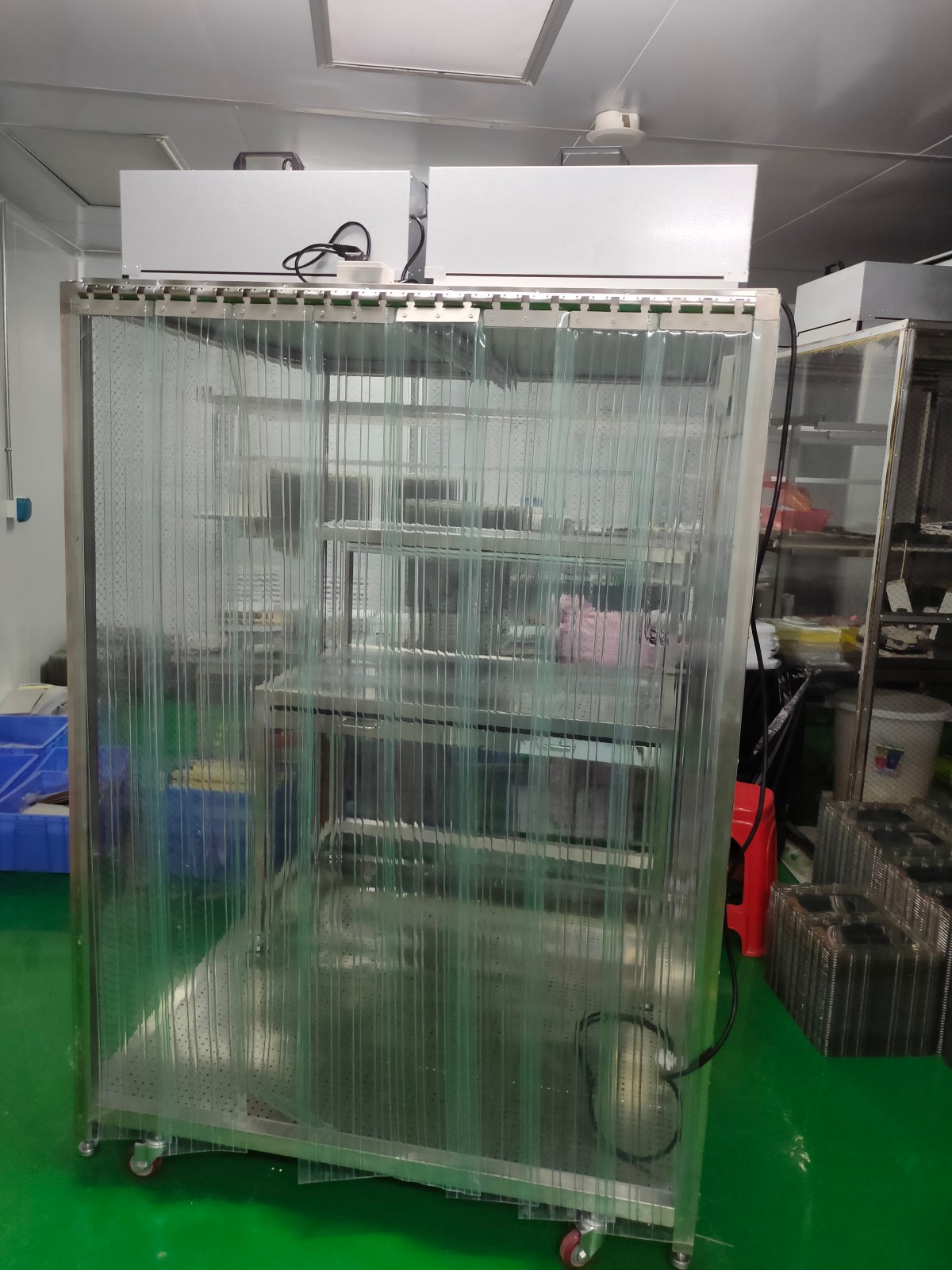
1. A clean room, also known as a clean work room (dust-free room, purification room, operation workbench, etc.), refers to a small space enclosed by anti-static mesh curtains or organic glass in a clean room. Above it, HEPA and FFU air supply units are used to form a relatively high purification level space in the clean room. The clean room can be equipped with purification equipment such as air shower rooms and transfer windows;
2. A clean room refers to a specially designed room that removes pollutants such as particles, harmful air, and bacteria from the air within a certain spatial range, and controls the indoor temperature, cleanliness, indoor pressure, airflow velocity and distribution, noise vibration, lighting, and static electricity within a certain required range. That is to say, regardless of changes in external air conditions, the indoor environment can maintain the originally set requirements for cleanliness, temperature, humidity, and pressure. The main function of a clean room is to control the cleanliness degree, temperature, and humidity of the atmosphere that products come into contact with, so that products can be produced and manufactured in a good environmental space. Such a space is called a clean room;
2、 Material comparison
1. The clean room frame can generally be divided into three types: stainless steel square tube, painted iron square tube, and industrial aluminum profile. The top can be made of stainless steel plate, painted cold plastic steel plate, anti-static mesh curtain, acrylic organic glass and other materials. Generally, anti-static mesh curtains or organic glass are used around, and FFU clean air supply units are used for the air supply.
2. The clean room generally adopts foam color steel or rock wool board ceiling with vertical wall and independent air conditioning air supply system. The air passes through the middle and high efficiency three-level filtration. The personnel and materials are equipped with air shower room and transmission window for clean filtration.
3、 Selection of Purification Levels for Cleanrooms:
The difference and comparison between cleanrooms and cleanrooms (dust-free workshops) are common among many customers. They will choose cleanrooms of Class 1000 or Class 10000, while a small number of customers will choose Class 100 or Class 10000. In short, the choice of cleanroom level depends on the customer's need for cleanliness. However, due to the relatively enclosed cleanroom, choosing a lower cleanroom level often brings some side effects: insufficient cooling capacity, and employees may feel stuffy inside the cleanroom. Therefore, in the actual communication process with customers, this point needs to be noted.
4、 Cost comparison between clean room and dust-free workshop:
1. Cleanrooms are usually built inside cleanrooms, so there is no need to consider air shower rooms, transfer windows, and air conditioning supply systems. The cost is greatly reduced compared to cleanrooms, and of course, this is related to the materials, size, and cleanliness level required for cleanrooms. The cleanroom will be built inside the cleanroom, but some customers do not want to build a separate cleanroom. Without considering air conditioning systems, air shower rooms, transfer windows and other purification equipment, the cost of the cleanroom is about 40% to 60% of the cleanroom cost, depending on the customer's choice of cleanroom materials and the size of the cleanroom. The larger the area that needs to be cleaned, the smaller the cost difference between a cleanroom and a dust-free workshop.
5、 Advantages and disadvantages
1. A) Clean shed construction is fast, cost-effective, easy to disassemble, and reusable; B) Due to the fact that clean rooms are usually about 2 meters high, using a large number of FFUs can cause loud noise inside the clean room; C) Due to the lack of an independent air conditioning system, the interior of the cleanroom often feels stuffy and hot; D) If the clean room is not built in the clean room, the lack of medium efficiency air filters will shorten the lifespan of high-efficiency filters relative to the clean room. Frequent replacement of high-efficiency filters will increase costs.
2. A) Clean room construction is slow and costly; B) The cleanroom is usually around 2600MM in height, and the staff working inside will not feel oppressed.