

How to achieve constant temperature and humidity in a clean room?
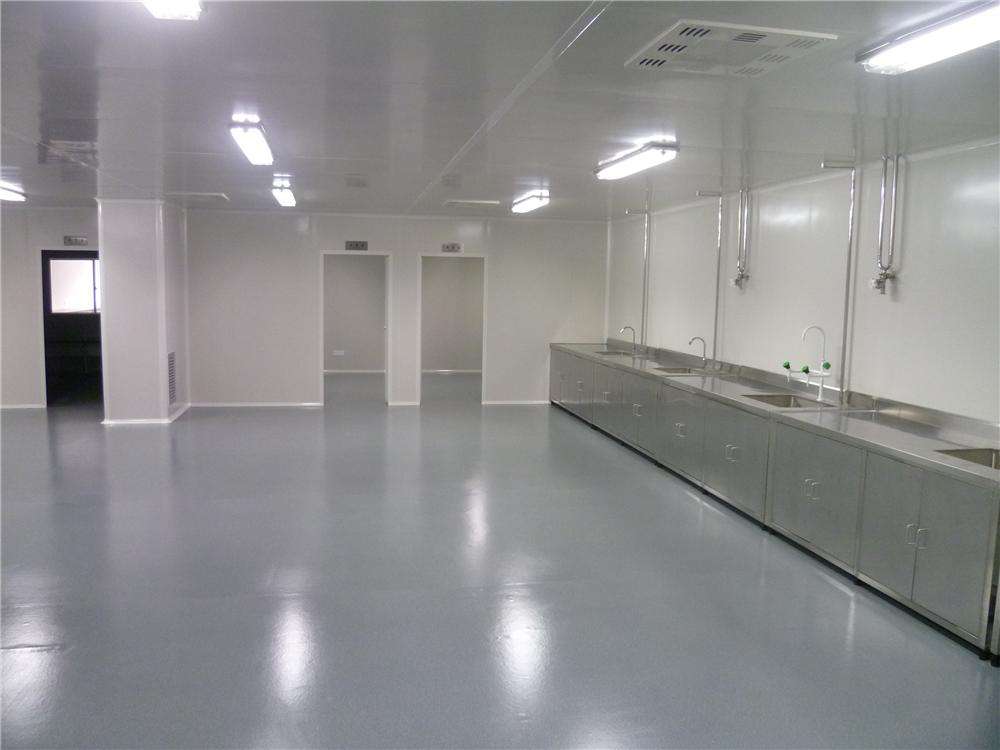
The core of achieving constant temperature and humidity in a dust-free workshop is a combined air conditioning system that integrates high-precision temperature and humidity control, air purification, and intelligent management. Its design is much more complex than ordinary air conditioners, requiring comprehensive consideration of multiple factors such as control, energy conservation, and cleanliness.
A typical constant temperature and humidity air conditioning system achieves precise control through the collaborative work of the following four aspects: 1 The temperature control system maintains temperature stability by adjusting the ratio of cold and heat. ·Core equipment: compressor, chiller unit, plate heat exchanger, dry and wet fan coil unit or radiant panel. ·Control logic: The sensor monitors the return air temperature, and the controller controls the supply air temperature by adjusting the opening of the cold water valve and hot water valve. ·Energy saving technology: Adopting independent temperature and humidity control technology, using high-temperature cold water (16-20 ℃) to control the temperature separately, can save 20% -30% energy compared to traditional systems. Using cooling towers for free cooling during transitional seasons is also an effective energy-saving measure. 2. Humidity control system Humidity control is usually divided into two independent subsystems: humidification and dehumidification. ·Humidification method: Steam humidification: Inject low-pressure steam directly into the air, with fast humidification speed and sensitive control. ·High pressure micro mist humidification: turns water mist into small particles, evenly humidifies, and is used in high-precision workshops. ·Dehumidification method: Freeze dehumidification: cools the air below the dew point to condense water vapor. This is the most commonly used method. ·Rotary dehumidification: using adsorbent materials for deep dehumidification, suitable for workshops with extremely low humidity requirements (such as low dew point). 3. Air purification and airflow organization are the key to a dust-free workshop, ensuring the "cleanliness" of constant temperature and humidity air. ·Multi stage filtration: Usually using primary efficiency, medium efficiency, and high-efficiency (HEPA) three-stage filtration, it can remove more than 99.97% of particles with a particle size of ≥ 0.3 μ m. ·Airflow organization: Adopting unidirectional flow (laminar flow) or non unidirectional flow design. Unidirectional flow cleanrooms are a common choice for high-end cleanrooms as they rapidly expel pollutants through piston like airflow. 4. Intelligent control system Modern systems rely on intelligent control to achieve high precision and energy saving, acting as the "brain" of the workshop environment. ·Core functions: real-time monitoring, automatic adjustment, fault alarm, data recording and analysis. ·Advanced applications: for example, the "edge computing+data-driven" system used by cigarette factories can complete a global assessment every 5 seconds and automatically optimize, while ensuring accuracy and significantly reducing energy consumption.